Beyond the Ticket: The Operating Grammar of a Global Cultural Occasion
A cultural occasion is not defined by the ticket alone. It is shaped by the intelligence behind the invitation, the suitability of the setting, the coherence of the programme, and the quiet precision of every transition. VERTU England’s Full Arrangement service approaches global arts and culture events as carefully composed experiences rather than isolated bookings.
A ticket grants entry. It does not, by itself, create a meaningful cultural experience.
The difference between attending an event and entering a cultural occasion is often found in the details that are least visible: why this programme was selected, how the venue relates to the work, whether the guest journey feels considered, and how naturally the evening moves from arrival to departure. For clients who travel across borders in pursuit of art, music, performance, design, and ideas, these details are not decorative. They are the structure of the experience.
This is the premise of Full Arrangement Services for Global Arts and Culture Events, the Cultural Events Planner service offered through VERTU England. Positioned as an arts, culture, and patronage advisory, it is designed for clients seeking a privileged and immersive cultural experience - one in which access, context, hospitality, and execution are brought into a single, carefully governed composition.
The event is a system, not a date
A major cultural event may appear to be a simple entry in a calendar: an exhibition opening, an opera, a biennale, a private concert, a design fair, or a gala. In practice, it is a network of decisions. The programme must be relevant. The venue must support the character of the occasion. The artist or institution must be approached with sensitivity. The guest experience must remain coherent across time zones, languages, access points, and service partners.
Public guidance on arts and culture event management similarly describes the work as a coordination of programming, artist relations, venue scheduling, logistics, ticketing, guest services, and partner engagement rather than a single administrative task. The implication is important: the quality of an event depends on how well its parts communicate with one another.
For a private client, that coordination should not feel like coordination. The visible result should be ease. The work behind it should be rigorous, discreet, and proportionate to the occasion.
| Layer | The question it answers | The VERTU approach |
|---|---|---|
| Cultural intent | Why this event, and why now? | Establish a clear cultural brief before recommending access or travel. |
| Programme | What deserves the client's attention? | Consider artistic relevance, context, timing, and personal resonance. |
| Setting | Where should the experience take place? | Assess venue, atmosphere, privacy, proximity, and practical suitability together. |
| Access | How should participation be arranged? | Coordinate tickets, invitations, reservations, and related access with discretion. |
| Execution | What must happen without friction? | Align production, transport, guest services, schedules, and local partners. |
| Continuity | What remains after the event? | Preserve context through follow-up, related recommendations, and considered next steps. |
From access to interpretation
Luxury cultural planning should not be reduced to obtaining the hardest ticket to find. Scarcity can be relevant, but it is not the same as significance. A privileged experience begins with interpretation: understanding a client's interests, cultural vocabulary, pace of travel, preferred level of privacy, and appetite for discovery.
That is why a Full Arrangement brief begins before a booking request. A client may be interested in contemporary art, but the most suitable experience may involve an artist studio visit, a curator-led viewing, a private collection, or a performance selected for its relationship to the city and the season. The correct answer is not always the most visible one. It is the one that creates the strongest fit between the client and the cultural setting.
This advisory perspective also protects the event from becoming over-programmed. The purpose is not to fill every hour. It is to create enough space for attention, conversation, and the unexpected associations that make culture memorable.
Why venue is part of the meaning
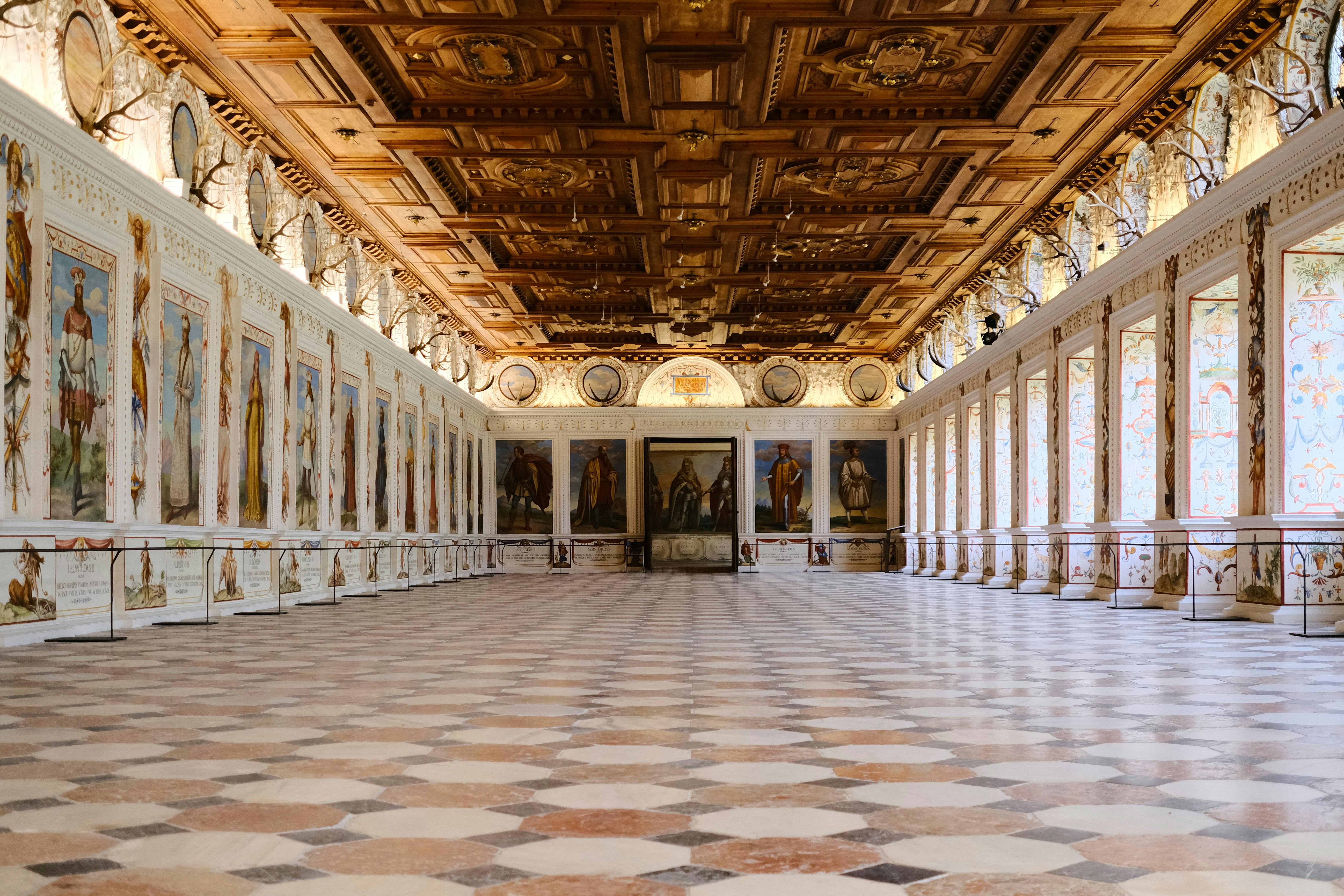
In the arts, the setting is rarely neutral. A gallery can create intimacy. A historic building can place a performance in dialogue with memory. A private residence can change the scale of a gathering. A contemporary architectural space can make the relationship between design, sound, and movement part of the programme itself.
Venue sourcing therefore requires more than capacity and availability. It requires a reading of atmosphere, access, circulation, service standards, technical requirements, and the relationship between the space and the work. A venue that is impressive in isolation may be entirely wrong for a particular artistic intention.
The practical dimension matters as much as the aesthetic one. Cultural venues regularly coordinate multiple spaces, teams, suppliers, schedules, and audience requirements; centralised event information and proactive operational planning are recognised as important safeguards against conflicts and avoidable disruption. For an international client, those safeguards extend across cities and countries.
VERTU's role is to bring the cultural and operational readings together. The result is not simply a distinguished location, but a setting that feels native to the purpose of the occasion.
The quiet discipline of full arrangement
A full-service cultural event may involve venue research, ticket or invitation coordination, artist and curator liaison, content production, guest-list considerations, hospitality, transport, staging, photography, videography, and local execution. The range of possible elements is broad, but the guiding principle is narrow: each element must serve the experience.
The public description of Goodson Gallery's luxury art event service provides a useful market reference for this integrated model, identifying worldwide execution, venue sourcing, artist curation, content production, ticket promotion, and tailored event design as connected components of a single service. It also distinguishes between intimate private enjoyment and events intended for broader awareness, a distinction that is essential to any serious cultural brief.
For VERTU, the same discipline is applied through a more advisory lens. The service is not a standard package with a predetermined visual language. It is a framework for assembling the right people, places, timing, and level of visibility around a client's intent. Some occasions call for complete discretion. Others may be connected to a foundation, a brand, a patronage objective, or a carefully selected circle of guests. The arrangement should follow the purpose - not the other way around.
A more intelligent form of hospitality
Hospitality is often measured by what is offered. At the highest level, it is also measured by what is withheld: unnecessary instructions, avoidable waiting, excessive exposure, and decisions that should have been resolved before the client arrived.
This is particularly relevant when an event crosses borders. A seamless experience depends on local knowledge, reliable communication, accurate timing, and a clear view of dependencies between partners. The client should not have to become the project manager of their own cultural journey.
The best arrangement creates a sense of natural progression. The invitation is understood in context. The route to the venue is proportionate. The introduction is neither over-produced nor under-prepared. The guest knows enough to feel oriented, while retaining the pleasure of discovery.
That balance is central to VERTU's understanding of cultural patronage: to make access more meaningful without making the experience feel managed.
When the occasion becomes personal
A global cultural event becomes valuable when it speaks to more than a general idea of prestige. It should have a personal reason for being there.
For one client, that reason may be a long-standing interest in a particular artist. For another, it may be the chance to place a family gathering within a broader cultural conversation. It may be a private celebration, an institutional relationship, a philanthropic objective, or simply the desire to encounter a city through its most thoughtful cultural moments.
Full Arrangement makes room for those distinctions. It begins with listening, develops through research and curation, and is completed through precise execution. The service may include the visible elements of an event, but its deeper value lies in connecting them into one coherent experience.
The VERTU standard
The standard is not spectacle for its own sake. It is relevance, restraint, and reliability.
A well-arranged cultural occasion should feel distinctive without becoming theatrical, exclusive without becoming inaccessible in spirit, and meticulously organised without revealing the machinery that makes it possible. It should leave the client with more than images of having attended. It should leave a stronger relationship with the work, the place, and the people encountered there.
Through Full Arrangement Services for Global Arts and Culture Events, VERTU England offers a considered way to enter the world's cultural calendar: not as a sequence of tickets, but as a series of opportunities shaped around meaning.
Because the most memorable part of a cultural event is rarely the moment the ticket is scanned. It is the feeling that every element - programme, setting, access, company, and timing - was brought together for a reason.